 |
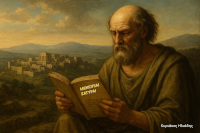
MENIPPUSGadara, 3rd c. BC |
Menippus of Gadara (3rd century BC) was a Cynic philosopher and satirical writer. Although none of his works survive intact, his influence was enormous: the Menippean Satires served as a model for later writers such as Lucian, Varro, and even for medieval and Renaissance satire.
Menippus' philosophy combines cynical ethics with a sharp, often comic, manner of expression.
1. Cynic root of his philosophy
As a Cynic, Menippus shared the basic principles of cynical thought:
• Self-sufficiency (self-reliance and simplicity in life)
• Apathy towards social conventions
• Natural life, according to nature and not to social rules
• Controlling use of reason to undo artificial desires
However, the way in which he presented them was unique: instead of serious philosophical treatise, he used humor, parody, myths and imaginary journeys.
2. Menippean Satire
Menippus created a new literary genre: Menippean satire.
Its characteristics:
• Combination of prose and poetry
• Parody of philosophical systems, especially Platonic metaphysics
• Imaginary or supernatural elements (e.g. journey to Hades, ascent to heaven)
• Sarcasm of human vanity
• Moral teaching through comic and distorted scenes
His satires were not simply humorous; they aimed at the disintegration of illusions: philosophical, social and personal.
3. Criticism of philosophical seriousness
Menippus attacks:
• dogmatic philosophers
• abstract metaphysical theories
• the arrogance of the "wise" and of the "elites"
• social hypocrisy
In his way, he argued that: philosophy that takes itself too seriously leads to ridicule.
Man needs:
• practical wisdom
• simplicity
• freedom from imposed and artificial ambitions
• humor against the human condition
4. Irony as a philosophical tool
In the Menippean satires:
• irony functions as a tool of purification
• strips philosophical theories of their pretenses
• shows human weakness and the ridiculousness of the pursuit of wealth, glory, power over others
5. Goal: Personal freedom
Menippus' ultimate goal is cynical: to free man from the illusions that enslave him.
That is why:
• it ridicules fears of death
• it demystifies gods and the metaphysical
• it demonstrates the futility of social statuses
Summarizing
Menippus was:
• a cynical philosopher,
• a creator of a pioneering satirical genre,
• a teacher with humor and insight,
• a destroyer of "serious" philosophy,
• and a defender of simplicity and human freedom.